

Heavy Equipment, Smarter Fields: How Mechanization Shapes Modern Agriculture
From land preparation to water management and post-harvest handling, heavy equipment is the quiet force behind resilient farms. Below is a research-backed look at where mechanization changes outcomes, and how Hundal Heavy Industries lines up the right machines for the work.
Field impact snapshot
Mechanization increases the speed and consistency of soil preparation, enables timely planting, and supports durable farm infrastructure. Research links mechanization to higher labor productivity and improved operational reliability in agriculture.[1]
On mixed farms, the strongest gains come from pairing the right machine size with the right attachment—reducing fuel waste, soil compaction, and rework.[2]
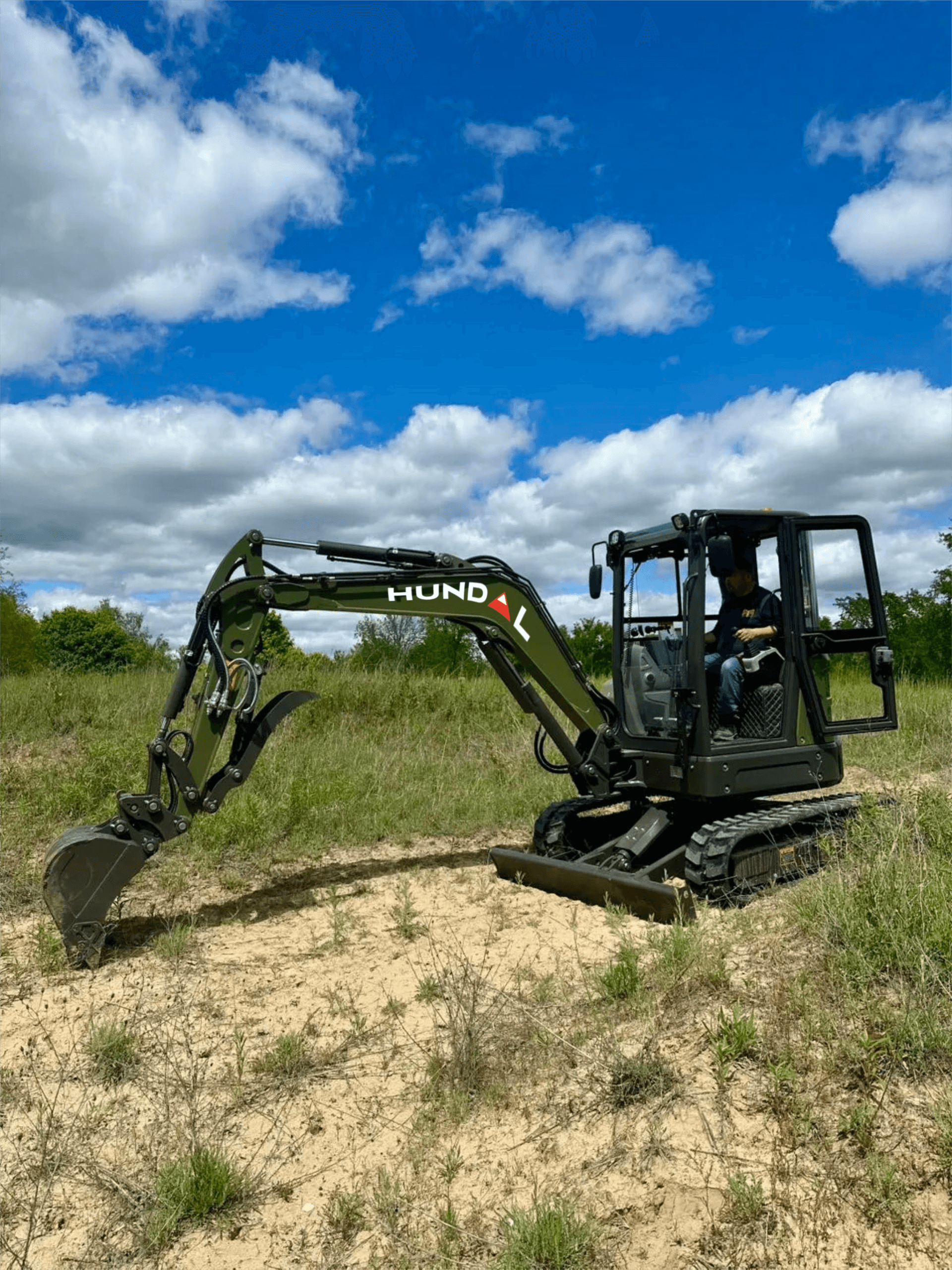
Equipment that keeps the season on schedule
Jump to section
Mechanization on the modern farm
Agriculture today is defined by precision and timing. Research shows that mechanization allows farms to complete time-sensitive field operations with consistency, which supports yield stability and reduces variability across seasons.[1]
Equally important is the match between machine size and field conditions. Studies emphasize that right-sized equipment paired with appropriate attachments is critical for soil health, fuel efficiency, and the longevity of on-farm infrastructure.[2]
Where heavy equipment changes outcomes
Land preparation and drainage
Grading, contouring, and drainage work determine how a farm handles water and soil erosion. Mechanized earthmoving helps improve uniformity and reduces the time gap between soil prep and planting.
Infrastructure that lasts
Farm roads, irrigation trenches, retention ponds, and storage pads rely on consistent compaction and trenching. Heavy equipment delivers the consistency needed for long-term durability.[3]
Material handling and feed management
Moving bales, silage, manure, and soil amendments efficiently keeps labor focused on animal care and crop quality, especially during harvest peaks.
On-farm precision work
Compact machines with attachment systems offer reach in tight spaces, helping farmers manage orchards, greenhouse sites, and tight access service corridors.
Mid-season support
Map the right machine mix before the rush hits
Get free guidance on matching machine size and attachments to your acreage, soil type, and field timeline.
Four machines that anchor an agricultural fleet
Hundal Heavy Industries builds a range of equipment that supports agriculture from soil prep to infrastructure maintenance. Each machine below is purpose-fit for agricultural demand and adaptable through attachments and power configurations.
Skid Loader
Fast, nimble material handling for feed, manure, soil amendments, and light grading. Ideal for barns, pack yards, and daily cleanup cycles.
Mini Excavator
Precise trenching and drainage work for irrigation lines, water access, and soil management in orchards or tight field edges.
Hydraulic Excavator
High-capacity digging and land shaping for retention ponds, field expansion, and heavy drainage projects that need reach and breakout force.
Compact Excavator
A heavier-duty take on the skid loader platform—built to use the same attachment ecosystem, but with a stronger engine for deeper, longer shifts.
Why farms choose Hundal Heavy Industries
Your season moves fast, and every delay ripples across planting, irrigation, and harvest schedules. Hundal Heavy Industries aligns equipment capability with agricultural realities—reliable uptime, attachment flexibility, and the power to move from land prep to feed handling without swapping fleets.
Ready for the next season
Build a farm fleet that keeps up with your acreage
Let us map the right mix of skid loaders, excavators, and attachments for your terrain, labor plan, and crop schedule.
Sources
- [1] Pingali, P. (2007). Agricultural mechanization: adoption patterns and economic impact. Handbook of Agricultural Economics, Vol. 3. Elsevier.
- [2] Sims, B. G., & Kienzle, J. (2017). Sustainable agricultural mechanization for smallholders: what is it and how can we implement it? Agriculture, 7(6), 50.
- [3] Binswanger, H. P. (1978). The economics of tractors in South Asia. Agricultural Mechanization in Development, 1(1), 1–14.